

Quick Answer
New gear sometimes doesn’t play well with old infrastructure. According to the FAA’s Nationwide Ground Stop: Questions and Answers, its legacy equipment became unstable when data began flooding the FAA FTI network at a rate of 1,000 connection attempts every 4 to 5 seconds. The initial investigation indicated two potential locations for the excessive data flooding: a radar site in Amarillo, Texas, and a radio communications site in El Dorado, Arkansas. The FAA implemented a nationwide ground stop out of an abundance of caution while it worked to identify, isolate and address the cause.
The FAA experienced instability at 17 of 22 Air Route Traffic Control Centers, and it spread into several Terminal Radar Approach Controls. On November 13, 2026, at approximately 3:30 p.m. ET, the FAA issued a nationwide ground stop out of an abundance of caution. Operations resumed at 8:15 p.m. that day, although airlines continued to experience delays and cancellations during recovery.
What Happened in the FAA Network?
The FAA said its legacy equipment became unstable when data flooded the FAA FTI network at a rate of 1,000 connection attempts every four to five seconds. The disruption affected aircraft communications and radar feeds, although certain radio frequencies and radar feeds remained operational.

Investigators identified two potential locations for the excessive traffic: a radar site in Amarillo, Texas, and a radio communications site in El Dorado, Arkansas. L3Harris, the FAA’s network service provider, had deployed a new router at El Dorado while maintenance work moved telecommunications lines from copper to fiber.
According to FAA Administrator Bryan Bedford, the agency was investigating whether the incident involved a faulty installation, a faulty configuration or router technology that propagated errors. Transportation Secretary Sean Duffy said the investigation had not determined whether the fault lay with contractor error or faulty equipment.
After L3Harris blocked both locations, the network stabilized. The FAA also disabled the broadcasting function on all the new routers as a precaution. About 3,500 aircraft landed safely, and more than 8,000 flight operations resumed on the night of the ground stop, according to the Department of Transportation.
Earlier Air Traffic Disruptions at Nats and Newark
At air traffic control services provider Nats, a technical issue caused Britain’s third major stoppage in just over three years in 2026. Nats said the fault was not the same as those that caused outages and mass disruption in 2023 and 2025. More than 1,000 flights had been cancelled by about 8pm on Tuesday, and at least 177 flights scheduled for Wednesday were cancelled, nearly all at Heathrow. Ryanair said more than 65,000 passengers had been delayed and 50 flights cancelled, and knock-on effects hit flights across Europe.
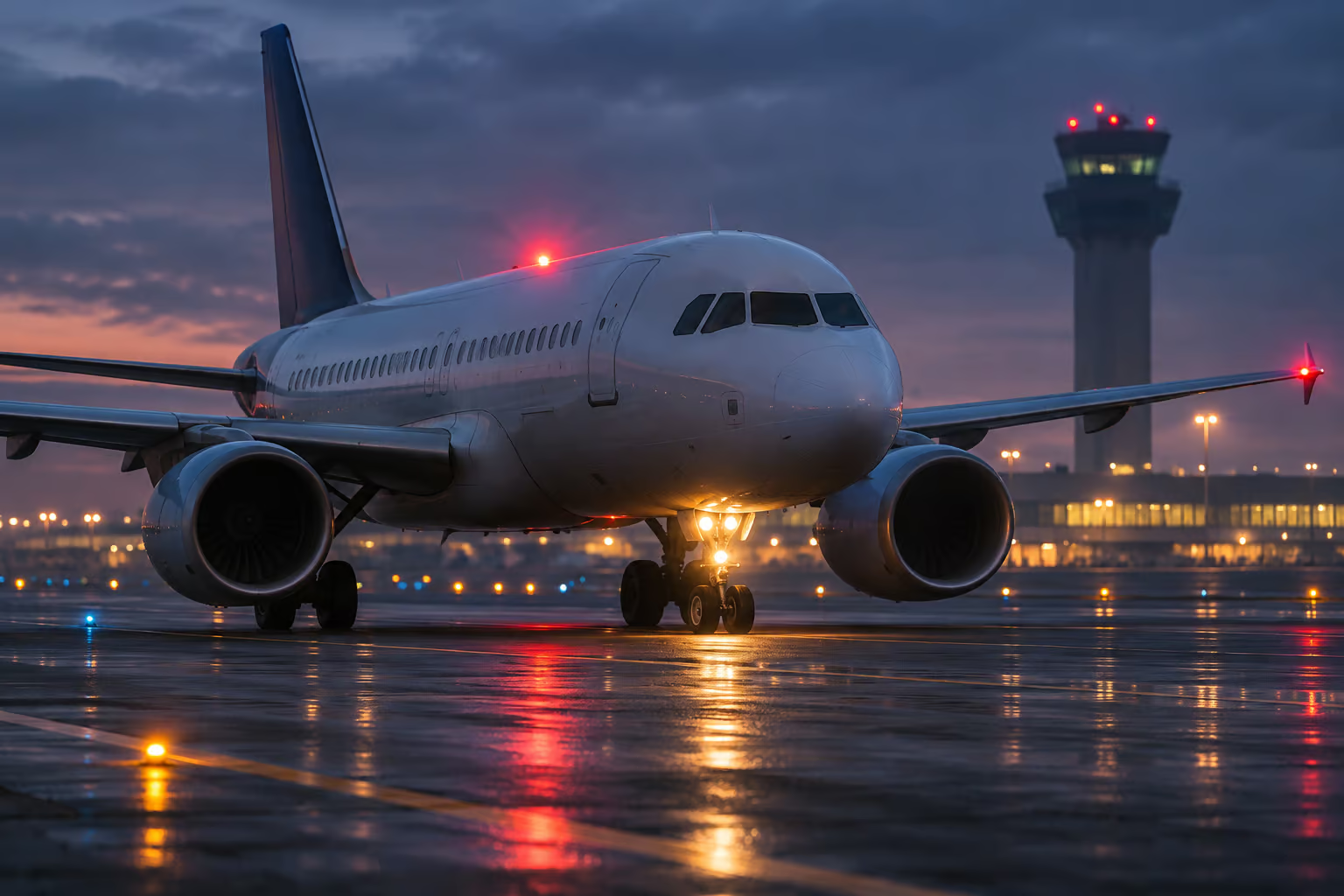
At Newark Liberty International Airport in 2025, a telecommunications issue at the Philadelphia TRACON Area C facility, which guides aircraft in and out of Newark, caused the FAA to issue a 45-minute ground stop. While air traffic controllers were able to communicate with aircraft, the radio system was not working correctly, prompting the switch to a backup system. By 9 p.m. on Sunday, nearly 260 flights had been delayed and 86 flights cancelled, according to FlightAware.
- Nats flight processing failure in 2026.
- Newark ground stop audio equipment issue in 2025.
Why New Equipment Can Disrupt Old Networks
The FAA was replacing telecommunications lines that had reached the end of their service life. The work involved moving a remote site from a copper, analog TDM connection to fiber and IP-based communications.
An HPE spokesperson said the routers appeared to be working as intended and did not fail. The FAA said its legacy TDM equipment became unstable when the connection attempts flooded the network.
The agency stated that the incident was not caused by its broader modernization program or by the SMART data aggregation system, which does not feed information into the air traffic control system. It also said available evidence showed no indication of a cyberattack or outside actor.
What the Evidence Shows
- The FAA reported 1,000 connection attempts every four to five seconds.
- Instability began at 17 of 22 Air Route Traffic Control Centers and spread into several Terminal Radar Approach Controls.
- Approximately 3,500 aircraft were in the air when the ground stop began, and all landed safely.
- The system was declared stable at 8:15 p.m. ET on November 13, 2026.
- More than 8,000 flight operations resumed on the night of the ground stop, according to the Department of Transportation.
What Small Businesses Can Learn From the Outage
Review infrastructure changes around aging components by considering how new equipment works with existing infrastructure.
For a small business, that means checking more than whether the new device works on its own. The article points to configuration, traffic behavior and how the new gear sits with the systems already in place.
Key Considerations
- Test new equipment with the oldest active components that will stay in service.
- The FAA’s incident involved maintenance that moved a remote site from copper to fiber and from TDM to IP.
- The investigation considered faulty installation, faulty configuration and faulty router technology as possible causes.
- The network stabilized after the two locations were blocked and the broadcasting function was disabled on the new routers.
- The FAA and L3Harris continued investigating the root cause after operations resumed.
What to Do Now
- Inventory the routers, switches, firewalls and other network devices still operating in your environment.
- Review the configuration and expected traffic behavior of every recent hardware or connectivity change.
- Test new equipment alongside the oldest active components that will remain in service.
- Document baseline network traffic and connection patterns for critical systems.
- Confirm that monitoring can identify abnormal connection rates and locate the affected device or site.
FAQ
What Caused the FAA Nationwide Ground Stop in November 2026?
The FAA said its legacy equipment became unstable when data flooded the FAA FTI network at 1,000 connection attempts every four to five seconds. The agency identified a radar site in Amarillo, Texas, and a radio communications site in El Dorado, Arkansas, where new routers had been deployed as potential sources.
Was the FAA Outage a Cyberattack?
The FAA said available evidence showed no indication of a cyberattack or outside actor.
Was Safety Compromised During the FAA Ground Stop?
The FAA said no. According to the FAA’s Nationwide Ground Stop: Questions and Answers, certain radio frequencies and radar feeds remained operational, every aircraft landed safely, and all passengers arrived safely.
How Many FAA Facilities and Flights Were Affected?
Instability began at 17 of 22 Air Route Traffic Control Centers and spread into several Terminal Radar Approach Controls. Approximately 3,500 aircraft were in the air when the FAA implemented the ground stop.
How Did the FAA Restore Its Communications Network?
L3Harris blocked the two potential source locations, which stabilized the network, and the FAA disabled the broadcasting function on all new routers as a precaution. The system was stable by 8:15 p.m. ET on November 13, 2026.