
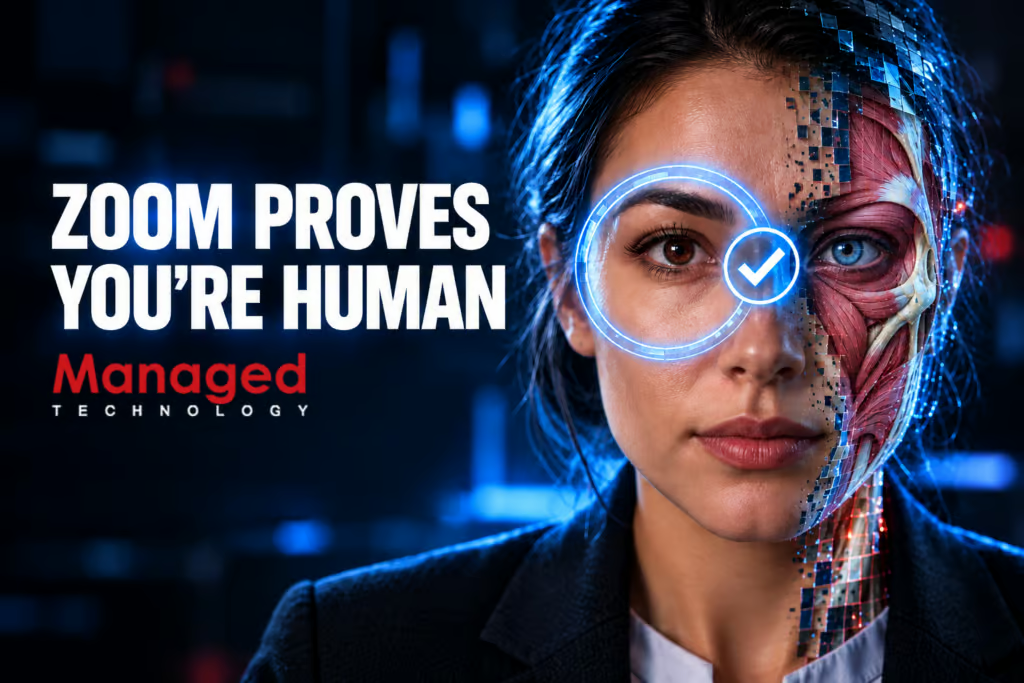
Zoom enterprise customers can now display a proof of human badge during video calls, confirming that the person on screen is a real, unique human and not an AI deepfake. The feature uses biometric identity technology from the World project and is available globally through the Zoom Marketplace.
How the human badge works
World ID for Zoom runs a three-way check before a Human Badge appears next to a participant’s video feed. The system compares an image captured by the company’s iris-scanning Orb, a live selfie submitted by the user, and the participant’s live video feed. When the three match, other people in the meeting see a Human Badge confirming a real person is present.
World first announced the Zoom integration in April, when it was in limited beta testing with VanEck Funds. The broader rollout makes the badge available to all Zoom enterprise customers. World has also named Bain Capital, Pantera Capital and other financial firms as design partners for its wider identity verification technology.
Why proof of human matters for enterprise calls
The rollout comes after several high-profile incidents in which AI-generated impersonators fooled employees on video calls. In 2024, an employee at engineering firm Arup transferred about $25 million after scammers impersonated executives during a video conference. In February, suspected North Korea-linked hackers used fabricated video feeds in fake Zoom meetings to trick crypto and fintech companies into installing malware.
These cases show why a visible, real-time signal of authenticity matters for finance, crypto and any business where a video call can trigger a wire transfer or a software install. A Human Badge gives meeting participants a way to confirm they are talking to the person they expect, not a synthetic impersonator.
What the badge verifies, and what it does not
The badge confirms a unique, verified human is behind the camera at that moment. It does not by itself confirm identity in the legal or government sense, and it does not replace other due diligence for high-value transactions. Companies using the feature still need to treat unusually large or unusual payment requests with the same caution they would apply to any other risk signal, because no single technical control can stop social engineering on its own.
The framing fits a market where deepfake tools cost less and require less expertise to use, where one convincing video can shift millions of dollars, and where one convincing video can compromise an entire network.
Where biometric identity is headed
Putting iris-based biometric checks inside a mainstream video conferencing product is a step toward making identity assurance a routine part of work calls, rather than a special-purpose security tool. For enterprises that handle frequent wire transfers, deal execution or access to sensitive systems, the badge offers a low-friction way to raise the cost of a successful impersonation attempt.
For meeting participants, the visible badge means a quick glance tells them whether the person they are looking at has been verified as a unique human, which is a useful check before acting on instructions given during the call.
FAQ
What is the proof of human badge in Zoom?
The proof of human badge is a visible marker shown next to a Zoom participant’s video feed when World ID for Zoom verifies that the person on camera is a real, unique human. It is available to Zoom enterprise customers through the Zoom Marketplace.
How does World ID for Zoom verify a real person?
World ID for Zoom compares an image captured by its iris-scanning Orb, a live selfie from the participant and the live video feed. When the three match, a Human Badge is displayed to other meeting participants.
Why is Zoom adding proof of human badges?
The rollout responds to a rise in deepfake-driven fraud on video calls, including a 2024 incident in which an employee at Arup transferred about $25 million after scammers impersonated executives, and a February incident in which suspected North Korea-linked hackers used fake Zoom meetings to trick crypto and fintech companies into installing malware.